
Almost two years have passed since my last blog post, a time in which there have been consequential changes to the world at large. One of the most significant is the continued rise of AI. Once, it was just a fun, quirky side tool for making strange memes and weirdly written news articles. But it has evolved at an ever-accelerating pace and is now front and centre in our daily lives.
Paradoxically, over the period, this blog has largely been neglected, while at the same time it began to be found by people. I was jolted from this repose in October 2026 by the PHP security issues that hit the internet, and WordPress in particular. After I initially missed the release of the patches, I decided to use the opportunity to upgrade the system with a clean reinstall. But first, I had to decide if I wanted to continue with it. Is blogging in the age of AI still worthwhile?
This post will explore that question, starting with the new challenges that have arrived.
AI Search
Google’s April 2026 redesign of the main search page has radically overhauled how internet search works by emphasising the AI capabilities [1][2].
While it looks like before, we are now presented with the choice of going straight to interactive AI chat, bypassing the traditional search entirely. Even when continuing with a standard search, the top item is now an AI summary – often these are more than sufficient. This AI summary is by no means a new feature and first began to appear in mid-2024 [3], though its full impact only became apparent recently. We have yet to see the impact of this year’s changes.
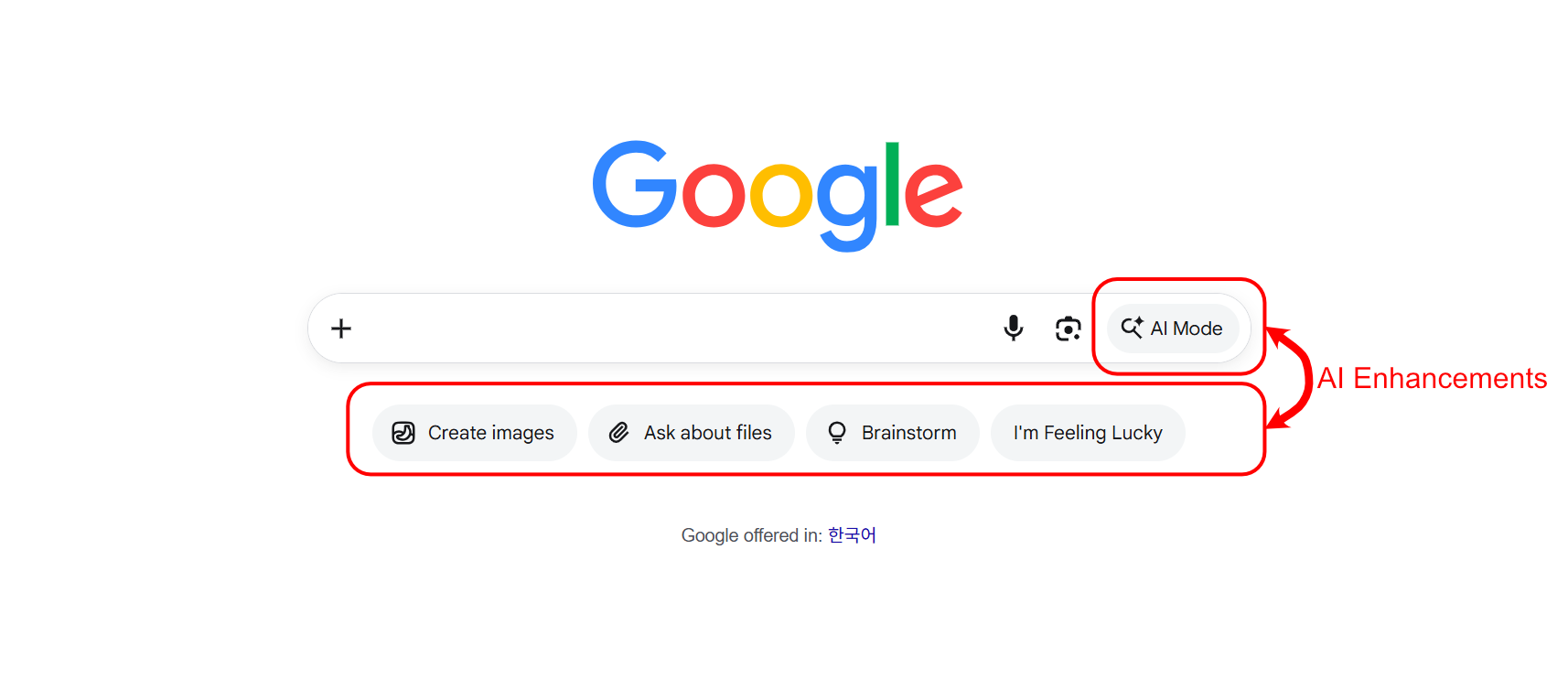
There is no denying that these kinds of enhancements are very powerful features for the end user. Unfortunately for websites, this greatly reduces their visibility, as it drops the traffic that a search engine like Google passes down [4][5]. A balance needs to be struck here; otherwise, we risk losing the websites that make the internet valuable.
Ironically, in some ways we have gone back to the time when search sites were portals that tried to keep people within, offering news and forums. Google ended this with their revolutionary, simple search page. For now, we are seeing a reduction in the overall traffic passed to websites, certainly from what it was two years ago.
Clickbait Proliferation
Clickbait sites have plagued the internet for much of its history, especially once advertising became financially rewarding [6]. The last couple of years have witnessed a proliferation of online clickbait powered by AI [7]. These sites exist to make money from advertising or worse. They do not provide a genuine service. Typically, they include pages packed with ads to the point that reading the content becomes difficult. Furthermore, the information they hold may be incomplete, inaccurate, or too vague to be of help.
AI has made it trivial to create entire sites with hundreds of pages mimicking the sites we actually want, such as news, guides and blogs. They often appear at the top of search results, so unlike everything else, their SEO is top-notch. The net effect is to drown out real blogs and websites, further reducing their discoverability.
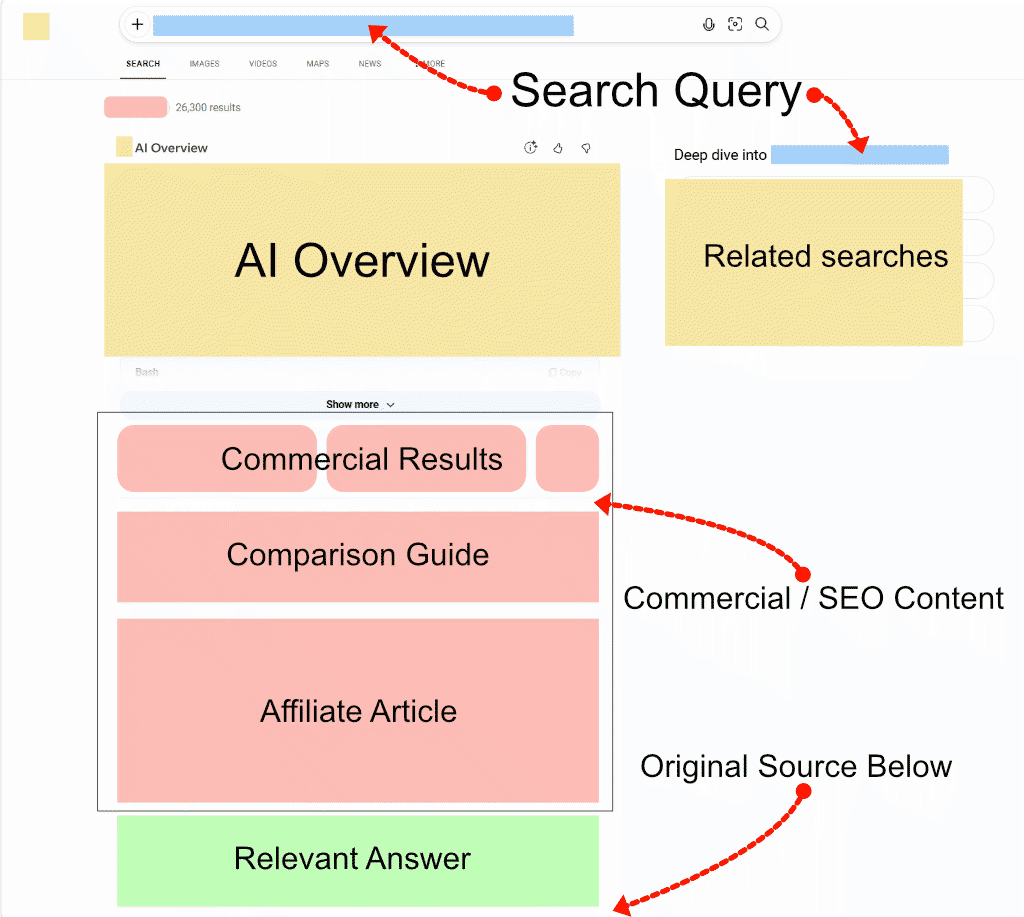
Recently, when trying to find guides on reinstalling an old server, I found it much more difficult to find the information I was looking for. Unfortunately, AI is a real accelerant to this problem.
The State of Blogging
In 2026, it has become more difficult for a blog to be noticed – discoverability is way harder. This would be true of all creative endeavours at this time and certainly not a unique problem. I think that despite these challenges, the advent of AI has not fundamentally changed the nature of blogging. To be honest, the vast majority of blogs exist in their own little worlds with few, if any, visitors. Mine certainly does. For the vast majority, blogging is more of a hobby, a method of self-expression.
Personally, I blog to scratch an itch and maybe have the odd person pass through. I hope to create the odd post that might be interesting or helpful to someone. Think of the quirky little blog sites that you randomly encounter, linked through Reddit, Hacker News, or found in an obscure search.
Beyond the Mainstream
Blog posts provide information, analysis, ideas, and simple entertainment separate from the mainstream media, as they always have done. Outside of the news and social media, they provide a place for people to connect with the thoughts of others in a more in-depth manner. This has not changed, and generally I find myself clicking through the search result links, looking for what the source actually said, which will often end up being someone’s blog page.
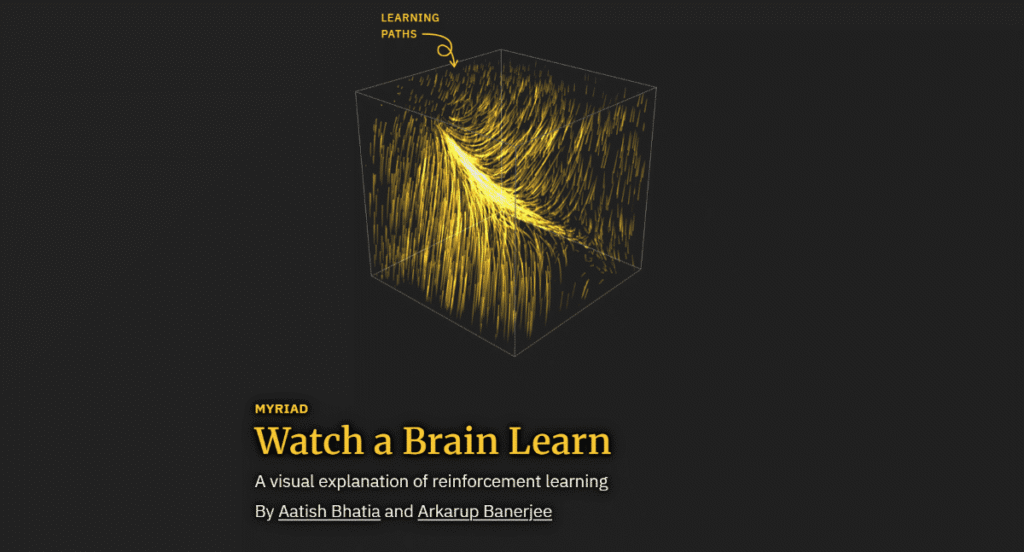
People still need to blog for this content to exist in the first place. AI summaries only exist because someone wrote the original. AI can generate words, but it cannot replace the value of an individual’s experience, opinions, and perspective. Blogging offers its own little soapbox from which we can share our interests, ideas, and activities.
In my case, I realise that I would still like to use my experience to offer insights into tech events. We live in very interesting times, but sometimes I find that the news does not always capture a fully nuanced picture of the technology stories that interest me. This is something I would like to introduce a little here.
Closing Thoughts
So, after rediscovering this site and spending some time thinking about whether to continue, I decided that it is still worth blogging in the age of AI. The web has changed considerably. Discoverability is harder than it once was; AI-generated summaries increasingly sit between readers and original sources, and the path from search result to website is no longer as straightforward as it used to be.
However, I do not think these changes alter the fundamental value of blogging. We all still have unique experiences, ideas and knowledge to share with others. While it is true that AI may help us find or summarise information, someone still has to create it in the first place. So whether a post is read by thousands or just a handful, there is still value in putting your thoughts out there. Have you ever thought about starting a blog of your own? I would encourage you to give it a try. You might be surprised who eventually finds it.
Notice
All photos and images that appear in this post are my own or are screenshots taken in fair use.